BLOG 3 Inclusion and Community Through My PLN
Think About Inclusion
Inclusion is not Assimilation: Understanding communities of identity and diversity Inclusion is not Assimilation: Understanding communities of identity and diversity
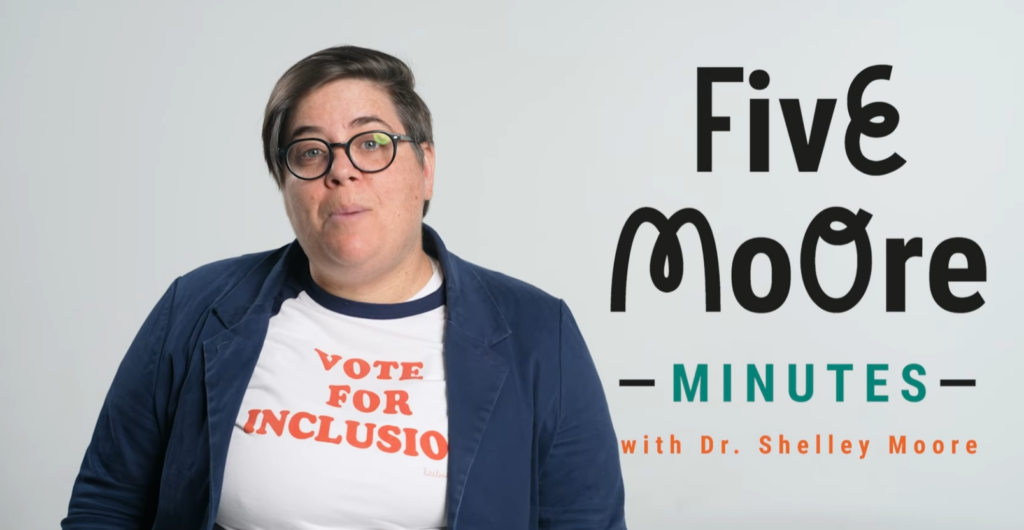
At first, I thought that ‘tolerance’ in the topic was a respectful and distant attitude. I think the so-called tolerance is actually an open attitude towards different opinions and a form of respect. But when I truly examine my PLN, I notice that most of the voices I frequently come into contact with feel familiar and unfamiliar in some way. Reading ‘One Without the Other’ made me realize that inclusivity does not automatically exist simply because people are technically allowed into a space (Moore&Schneider, 2016).
Inclusion Is Not Assimilation
After reading this week’s materials, one idea that left a deep impression on me was Shelley Moore’s perspective on inclusivity. She believes that tolerance does not equate to assimilation. Inclusiveness does not require individuals to change themselves for the sake of belonging, but rather to acknowledge the existence and value of differences within the community (Moore, n.d.). I began to ponder whether the online environment I encountered truly allowed for differences, or whether it subtly supported voices that were consistent with mainstream or familiar viewpoints, subtly influencing everyone. This also made me realize that diversity alone cannot guarantee inclusivity.
Social Media, Communication, and Visibility
Obama addresses disinformation in speech at Stanford Obama addresses disinformation in speech at Stanford
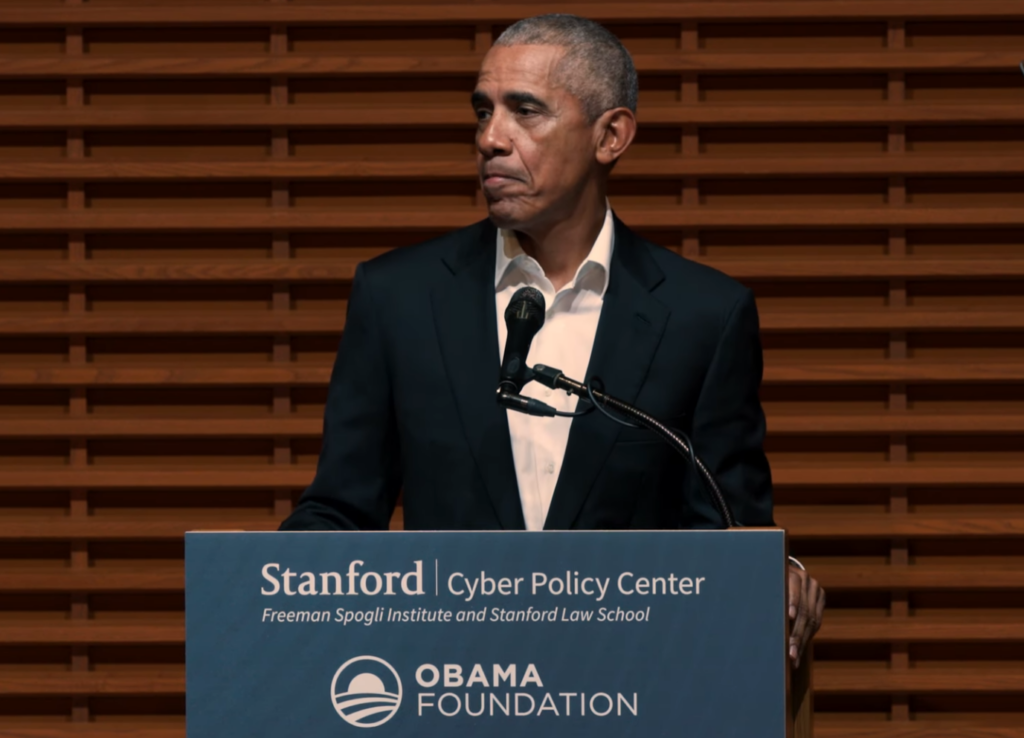
Social media platforms are strongly connected to PLN’s internal communication. They can quickly and widely disseminate videos and viewpoints through big data algorithms. Meanwhile, this will also affect the amplification of some sounds. In a speech at Stanford University, US President Barack Obama discussed how social media and search engines shape the content people see, which often makes it difficult to distinguish between reliable information and misinformation (Obama, 2022). This made me more aware that online inclusivity is closely related to visibility, and visibility is not always evenly or fairly distributed.
Disinformation and Professional Responsibility
False information is a major challenge in public learning networks. As Clark and Aufderhaide (2011) pointed out, the public media space is not neutral; It creates a triangular structure of participation, power, and trust on public platforms. So, from a professional perspective, being part of a public PLN requires careful judgment. The dissemination and sharing of information without academic validation or research support can inadvertently reinforce the spread of false information, which is very frightening. So, it seems that this inclusiveness should be held accountable.Disinformation and Professional Responsibility
My Thinking Has Changed
After reflecting on my personal experiences with PLN, my perspective on inclusivity has indeed taken a step further. When we want to have a good communication environment, a diverse and inclusive PLN requires our active efforts. At the same time, we should appropriately consider and question other viewpoints, especially in professional and community oriented spaces. This awareness is particularly important because public PLNs not only reflect personal interests, but also judgments and responsibilities.
References
Clark, J., & Aufderheide, P. (2011). Media & social justice: A new vision for public media. Center for Social Media.
Moore, S. (n.d.). PLN diversity, inclusion, and social media [Video]. Course YouTube Channel.
Moore, S., & Schnellert, L. (2016). One without the other: Stories of unity through diversity and inclusion. Portage & Main Press.
Obama, B. (2022). President Obama addresses disinformation [Video]. Stanford University. https://www.youtube.com/watch?v=LH6kq3HhjgQ